
Time for Starmer’s government to start being honest with itself about its failures?

It is being reported that in response to a sell-off of UK government bonds, increasing the costs of Government borrowing, Rachel Reeves is mulling whether further public expenditure cuts will be needed.

We are told that given Labour’s political commitments not to raise tax or to increase borrowing, cuts may be the only option. The problem with this is obvious; Labour has nailed its economic colours to the mast of “growth”, but public expenditure cuts will lead to precisely the opposite. When the Office of Budgetary Responsibility forecasts released at the time of the last budget – before any new cuts – predict falling household incomes over the lifetime of the Parliament, and with consumer demand being the engine that drives growth in the UK economy, Labour’s growth mantra was already looking unachievable.

Labour in opposition – quite understandably – made economic competence a key part of its message. But it failed to understand that the big decisions are always political, not economic. It sought to depoliticise economic decision-making by making it technocratic, and downplaying how it always involves choices – even to the point of embellishing their Shadow Chancellor’s career record. But its timidity and its reluctance to set its own economic agenda, relying on imagination-free and in many respects apolitical notions of competence to confront an economy marked by falling living standards, soaring inequalities, collapsing public services and the untold economic damage wrought by Brexit, have come to haunt it and increasingly to define what looks increasingly likely to be Starmer’s single term of office.

Starmer and Reeves might have learned from Gordon Brown, the most successful Chancellor of recent times, who had no background in economics at all, and who never claimed to have one. He got the politics, for the most part, right; which is why he was successful. His successors seem incapable of doing so.

Reeves and Starmer have boxed themselves in, not for reasons of economics, but because they have made bad political choices – in particular by ruling out tax rises. The simple fact is that public services are broken, and they need major injections of cash, now. It’s no good waiting on some chimerical notion of growth to deliver in a decade’s time. The UK tax system bears more heavily on those who earn wages – the so-called “working families” at the centre of Labour’s language and iconography – than those who get their income from sweating assets, like landlords and those drawing dividends. But Labour seems to be scared to offer any political leadership on this issue. It appears to be incapable of leading any kind of debate about tax, spending and economic justice; what used to be its raison d’être as a party is no longer on the agenda. It has become a party that, for all its occasional grandiosity of language (“world-beating”, “Great British”, “mission-driven”) thinks small and acts smaller; the times call for something altogether more fundamental.

In other words, and not for the first time, Labour appears to be demonstrating that its post-Corbyn incarnation just isn’t very good at politics.

This may seem an extraordinary thing to say of a party that won a landslide majority in the House of Commons, but in political terms Labour did very badly at the 2024 election. Gifted a win by a manifestly failing and exhausted Conservative government, and with the Right split between Tories and Reform, this was an election that only a Liz Truss-like self destructiveness could have lost.

But even in these circumstances, the outcome was poor. Labour achieved barely a third of the vote in an election where only half the adult population voted. Its vote fell in total numbers from 2019 and it received fewer votes than the combined Tory and Reform total. It performed far worse than Corbyn’s Labour, in far more adverse circumstances, had done in 2017.

Moreover, we knew what Labour was against, but very little about what it was for. This is unsurprising given the roots of the Starmer nomenklatura in the Labour’s Progress movement, the astroturf party-within-a-party whose purpose was not to promote a political programme, but to undermine one – that of the old Labour Left.

So we went into the 2024 election knowing far more about what Labour wouldn’t do than what it would do – it was reactive, and never set an agenda. In particular, its mantra of “growth” was unsupported by any indication of how the supply-side measures intended to deliver it, including planning reform and lower corporate taxation, would result in a virtuous circle of increased household incomes, demand and investment rather than a vicious one of price-gouging, land-banking and profit-taking. In the days of George Osborne, economists like Nobel Laureate Paul Krugman used to joke about waiting for the confidence fairy; Starmer and Reeves appear to be the roadies for her comeback tour. Again, apparently repeating a strategy that has failed once in the expectation that it will be different this time does not look like particularly clever politics.

Since coming to office, Labour has shown dreadful political judgement. The continuation of the two-child cap, the withdrawal of winter fuel payments for millions of pensioners (most of them poor) and the refusal to compensate the WASPI women for the DWP’s maladministration have seen Labour throwing away its very limited political capital on low-to-medium ticket items in public expenditure terms. When a senior Cabinet Minister takes to the airwaves to claim that without abandoning universal winter fuel payments the economy would have crashed, you know that something is seriously up; you don’t respect the electorate by feeding them self-evident piffle.

And one has to wonder – who on earth in Labour’s hierarchy thought it was a good idea for Starmer and other senior Labour figures to take donations of designer clothing and spectacles in opposition? Did nobody really reflect on how, once public, this information would play into the hands of the populist narrative of “they’re all the same”?

A government with no real electoral mandate, that refuses to set a political agenda, and has a massive intellectual vacancy at the heart of its economic policy is now reaping the political whirlwind. It knows, from the US experience, that talking a good talk is no electoral substitute for rising living standards, and is now mulling proposals that will only serve to make households – especially those on lower incomes – worse off.

And it is up against a political opponent in Nigel Farage’s Reform that, for all its policy incoherence, appears to be politically far sharper – witness the way in which it is talking about NHS funding and at least part-nationalising failing utilities; seizing traditional Labour territory where Labour is now afraid to go.

Labour is not being honest with itself about the 2024 election. Its Parliamentary landslide allows those responsible for what was at heart a poor result to congratulate themselves, and earn the applause of a party from which the same people have largely eliminated critical voices. They are now the people responsible for Labour’s bad politics. And until it starts being honest with itself about the situation it faces, and the inadequacy of its response, the failures will continue.
Why Brexit is working – with profound consequences for democratic politics

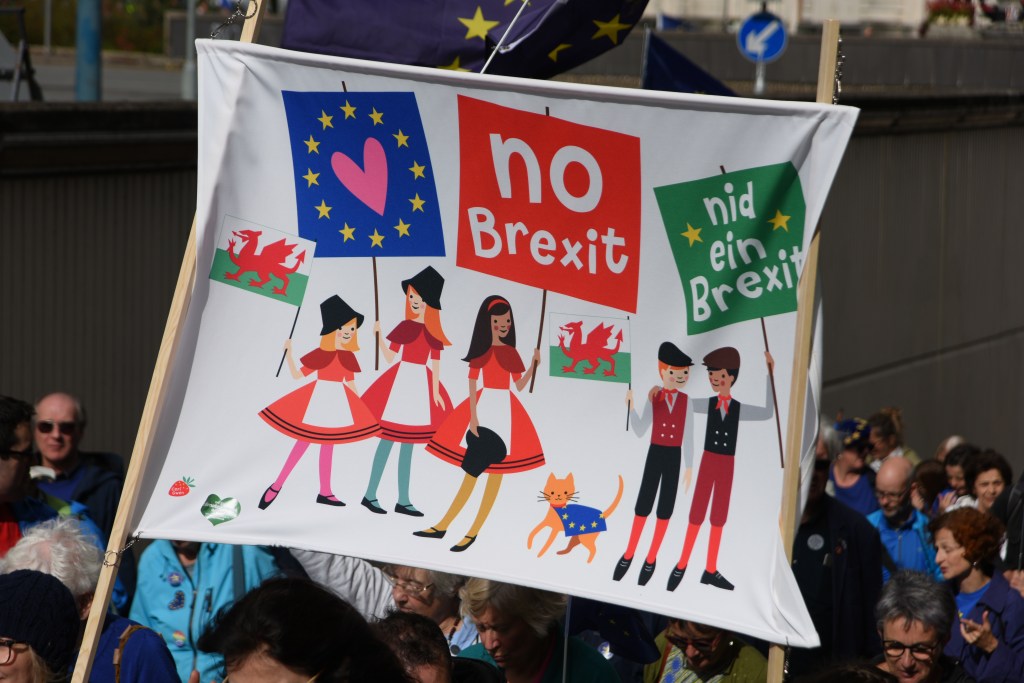
Most people on the centre and left, and many beyond, believe that Brexit is failing.  There’s no doubt that in transactional terms – in terms of its economic and social impact –  it has been a disaster.  And there is no doubt that public opinion is turning against Brexit, although there is still a strong and vocal hardcore of true believers.

But those claims fail to address the true nature of the Brexit project – that it was always about politics and power: the economic and social advantages its advocates promised were never the point.  

The politics of disruption

To understand Brexit – and why it is working – one has to see it as an act of political disruption, and its advocates as self-appointed “disruptors”.  Disruption, in the political sense, is about breaking up political consensus and the structures that support it in order to create a chaos from which insurgent politics can seize the agenda and attain power.  It uses conspiracy theory, fake news, and other insurgent techniques to pull down the structures that maintain the status quo, presenting them as the expressions of a self-serving elite, which excludes the mass of ordinary people – regular people living in a world of common-sense – from influence or power.  It is about maintaining a fiction of democratic empowerment – while, for the most part, ensuring that no such thing happens in fact.

It is particularly damaging in a society that has no written constitution, and where constitutional practice is embodied in an arcane system of convention and precedent.  Indeed, the central political message of Brexit was about sovereignty – about “taking back control” – and asserting the purity of a system under which Parliament, untrammelled by EU law, can legislate as it pleases without constitutional constraint. Arguably the only place where many of the individual rights of British citizens were codified was in the Treaties of the European Union. In a society in which living standards and expectations have fallen consistently over a long period, Brexit was fundamentally about mobilising political and economic grievance in pursuit of a political agenda and a project in which rights would be entirely subordinate to whichever party wields a Parliamentary majority, which becomes a substitute for “the will of the people”; in which an independent judiciary upholding the rule of law, the civil service, and even scientific experts can be cast as enemies of the people.

And this is why Brexit is working.  Not because it has delivered anything of substance for the United Kingdom – let alone any of the benefits its advocates promised – but because of its wholly destructive effects on British politics and democracy, and how that has in turn led to the seemingly rapid rise of the authoritarian right. 

Destruction

Brexit’s effect on the Westminster system has been wholly destructive.  From a Conservative government unlawfully proroguing Parliament and proposing legislation on Northern Ireland that wilfully breaches international law, to a Labour government cheerfully throwing out the Ombudsman’s recommendation that the WASPI women should be compensated for the DWP’s gross maladministration because it would be “too expensive”, the norms and conventions that have allowed the Westminster system to function as a representative democracy have been abandoned.  And, crucially, it is destroying public confidence in the political processes of the Westminster state.

It has destroyed the Conservative Party – the party that had long been the guardian of the constitution and the union, and the masters of its practise of convention and precedent, but which following Brexit was captured by a populist right that tried and failed to out-Reform Reform; that achieved an election win on the basis of Brexit votes in 2019 but was utterly shattered when a cohort of voters who largely despise what the Conservative Party has always been, but were prepared to lend them their votes to “get Brexit done”.  

And it is doing the same to Labour. Labour in government is committed to “making Brexit work” and repeats its red lines of no freedom of movement, no rejoining the Customs Union or Single Market.  Electorally fragile, despite the Parliamentary landslide gifted to it by a divided opposition, and hamstrung by a series of political disasters, from the revelations that donors paid for Starmer’s suits and spectacles (guaranteed to play into the populist Right’s “they’re all the same” mantra), to the abolition of winter fuel allowance, Labour’s first six months have seen it reduced to an object of ridicule and contempt, presiding over a renewed austerity that will see – on its own predictions – household incomes fall substantially throughout the current Parliament.  Its fate seems likely to be similar to that of the US Democrats, who at least had a decent record of economic delivery on their side, but who failed to connect with the people they needed to win.

Labour still seems incapable of setting a political agenda that will resonate.  It’s still traumatised by what it sees of the desertion of its natural Red Wall support to the Tories in 2019, in the name of “getting Brexit done”. There’s no evidence that those voters are coming back, but a party whose working-class origins are still at the heart of its political mythology, and a belief in the “authenticity” of that support, is still seeking to follow the agenda that has led those away from Labour, rather than seeking to lead by creating an optimistic and grounded narrative of its own.  Labour has consistently appeased the right, whether over freedom of movement, or its Uxbridge by-election ULEZ wobble, or in its adoption of an explicitly British nationalist iconography and Keir Starmer’s use of conservative tropes about flag, work and family; and if there is one thing the Brexit process taught us it’s that the populist Right will simply bank concessions and demand more. 

There is a brutal paradox in a Labour Party with a commanding Parliamentary majority, that sits paralysed like a rabbit in the headlights, apparently happy to let its opponents set the political agenda. That is Brexit’s real victory; the utter political neutering of Westminster’s established political parties, leaving the field clear for the populist right.  

The implications for us on the liberal left – the opponents of Brexit – are obvious. We talk endlessly of how Brexit is failing; in transactional terms, we’re right to do so.  But we need to rise to the challenge of how Brexit is succeeding – how it’s destroying our political structures and paving the authoritarian Right’s path to power.  That doesn’t mean defending the failing Westminster system – the pre-Brexit system was genuinely rotten, the anger against the political class that drove Brexit was in large measure justified. Unless we acknowledge that we’re going nowhere. We need to find an alternative vision and language, something better and more appealing.

The Tao of Brexit

I’ve written elsewhere about the Tao of Brexit – that Brexit is a state of mind rather than something concrete, what Raymond Williams would have called a structure of feeling. Therein lies its power. It privileges feeling over evidence – and the populist right has shown itself to be incredibly adept at manipulating feeling. One of the reasons why Brexit is succeeding is that it has taken discourse into places where almost no mainstream Westminster politician wants to go – into nostalgia, and the way in which two decades of austerity have damaged not only material wellbeing, but the morale and confidence of people who have seen their living standards so savagely attacked, and who trust neither an economic system they believe to be rigged against them nor the political class who run it.  Brexiter politicians – whether Conservatives or Reform – seek to garner support by denouncing the economic elites of which they are overwhelmingly members.  The fact that they can still get away with doing so, that they appear to be gaining support, and that the liberal left has not so far found the language or narrative to stop them, demonstrates that Brexit is working.

Moreover, the populist Right thrives on the idea that it is somehow “owning the Libs” – we’ve seen the same from the MAGA insurgency in the US too. As with any other insurgency of the populist Right, there has always been a nihilistic element in the Brexit mix. The best way to show that we’re not going to take being “owned” is to be confident and optimistic in expressing our beliefs; to refuse to be intimidated by that overworked and increasingly meaningless word “woke”; to promote forward-looking, progressive and evidence-based narratives; to call out conspiracy theories and fake news, and to condemn those politicians and parties who surrender to the Right’s framing and allow them to set the agenda. It is difficult to be intellectually and politically confident in the face of populism, but we have to do it. 

It also means getting off the fence.  It means understanding that politicians who argue that we can – or should – “make Brexit work” have either misunderstood what Brexit is, or are not prepared to confront Brexit’s political implications.  Nobody really should be surprised that confronting a political shock on the scale of Brexit requires an abandonment of old political loyalties and the building of new political alliances and structures.  The People’s Vote campaign made basic mistakes, many of them rooted in a misunderstanding of both Brexit’s structure of feeling and the resentment of those outside the political class who saw Brexit as a moment of agency – it looked far too much like the affluent middle class trying to reverse the one moment when an alienated and disregarded public had their say – but it did show how political alliances can be made in the face of confusion and hostility at Westminster.

But most of all we should be very wary of a narrative that says that Brexit has failed.  In so many ways it has, but that is beside the point.  We need to start by understanding how it is succeeding, and understanding the profound impact of that success on our democratic practice.  To do otherwise is to give the populist authoritarians a clear run.

The fight of our lives

Liberal democracy, in Britain and elsewhere, is in a parlous state.  2024 has seen authoritarian populism make major advances – the election of Donald Trump as US president above all, but in Europe too, as parties of the Right continue to make inroads.  

Here in the UK, we have a government, nominally of the centre-left, recently elected with a huge Parliamentary majority.  But that landside conceals an essential democratic fragility; it was achieved with barely a third of the vote and thanks to a divided Right, whose combined vote share was higher than Labour’s. For all Labour’s language of change, and growth, it was essentially a victory resulting from rejection of a catastrophic Conservative government rather than for a clear programme that generated any great enthusiasm.

Moreover, Labour’s performance in office has been dismal.  It has made a series of errors – in terms of both policy and competence – and inexplicable decisions that have simply played into the hands of the populist Right.

In particular the revelation that Keir Starmer and members of his Shadow Cabinet has been gifted expensive suits and spectacles played right into the populists’ narrative that “they’re all the same”. And, as with the row over former Welsh Labour leader Vaughan Gething’s leadership election donations from a convicted environmental criminal, the Party’s official defence – that no rules had been broken – showed a tin-eared lack of awareness of the cynicism many people feel towards a political system that many people – especially those who have experienced collapsing living standards under a decade-and-a-half of austerity – is irretrievably rigged against them. 

But even had Labour been more competent in office, and had received a more convincing electoral mandate, it would have faced serious problems from the populists. It was always obvious to me, well before the election, that even had it been better at Government, a Starmer government would mean that liberal progressives would be facing the fight of our lives.

I start with Brexit  – the most important political event of the past decade, possibly since 1945. Yet mainstream politicians appear incapable of understanding its essentially political nature, and its real meaning, preferring instead to concentrate on its transactional effects.  As I argue elsewhere, Brexit may be the transactional disaster its opponents predicted it would be – damaging the Britain’s economy and its international reputation – but that’s not really the point; it gives every indication of having produced the political disruption its proponents wanted, and therefore it’s just wrong to say it isn’t working.  Moreover, its real political appeal simply isn’t transactional – it’s less a set of policies than a state of mind, one that gives its supporters the illusion of agency and power; therein lies both its strengths and weaknesses. But that Tao of Brexit – something I’ve written about elsewhere – was never understood by its opponents, and that failure haunts progressive politics still. 

Labour’s declared policy of “making Brexit work” makes precisely the same errors.  If it means anything at all, it means lumping it – transactionally at least, we just need to live with the damage, and the hit in living standards it implies. But I’d argue that’s missing the point – Brexit is about the undermining of Britain’s democratic and constitutional norms, and advocate making it “work” is to be complicit in that programme of the authoritarian Right.

But the nature of political discourse is itself a concern.  The growth of social media platforms like Twitter was originally seen as a welcome and liberating counterblast to an official media that too often reflected establishment views; it has become the plaything of hard-right billionaires and the oligarchs’ weapon of choice, and encourages a political discourse that is angry, unreflective, abusive in every sense of the word.  It is a discourse that favours shouting over thinking, the emotional over the reflective, the knee-jerk over the considered, the simplistic over the nuanced.  It has become the (well-manured) soil in which authoritarianism flourishes. And too often it has led to an authoritarian and intolerant activism on behalf of ostensibly progressive causes – including on University campuses where free and open discourse has often struggled to flourish in what ought to be its natural home – that has too often allowed the authoritarian right to manufacture a backlash that allows it to pose as the defender of liberal causes.

The Trump election in the United States offers an economic warning – that it is not good enough to offer abstractions about growth and economic progress to people who have experienced years of declining living standards. For all the talk of growth, the OBR forecasts that living standards in the UK will continue to fall throughout the Parliament. The explicit strategy is that the funding to repair Britain’s collapsing public services will come from growth, but there is no strategy to ensure that the proceeds of growth – even if it is delivered – will be distributed in a way that will improve the living standards of the many, rather than provide dividends and profits for the few. We are still in the discredited world of trickle-down economics. 

Labour is also an explicitly Unionist party and remains implacably hostile to the ambitions of Scotland, Wales and Northern Ireland for greater self-government.  I am writing this blog in Cymru, as a confirmed supporter of Welsh (and Scottish) independence (Northern Ireland, because of the international guarantees that form the basis of its current political status, is a special case).  As a former Whitehall Civil Servant who moved from England to Wales a decade ago, I have become increasingly convinced of the intellectual case for independence, grounded in democratic and economic necessity, and the fact that the Westminster constitution – gravely wounded by Brexit – was no longer fit for purpose.  

For all these reasons we are living in a time of the perfect populist storm. The frustration and failure of decades of austerity – which found expression in the Brexit referendum result – and the absence of any credible or politically-serious strategy in mainstream Westminster politics to deal with them, along with the rise of an organised, well-funded political right waiting to exploit the weaknesses of an inept government without any real political mandate, mean an unprecedented level of democratic threat.

Westminster is aware of the threat but seems incapable of understanding it. The response to this threat needs to be rooted in uncompromising honest analysis – which means confronting decades of political and economic failure. It means being honest about Brexit and the disintegration of the Westminster settlement. And it means challenging aspects of the way politics is conducted, of political discourse, including those on what is normally considered to be the progressive side of politics.

The purpose of this blog is to explore and promote discussion of those issues. It is to try and fill in the gaps and evasions, the things that mainstream Westminster politicians don’t want to discuss.